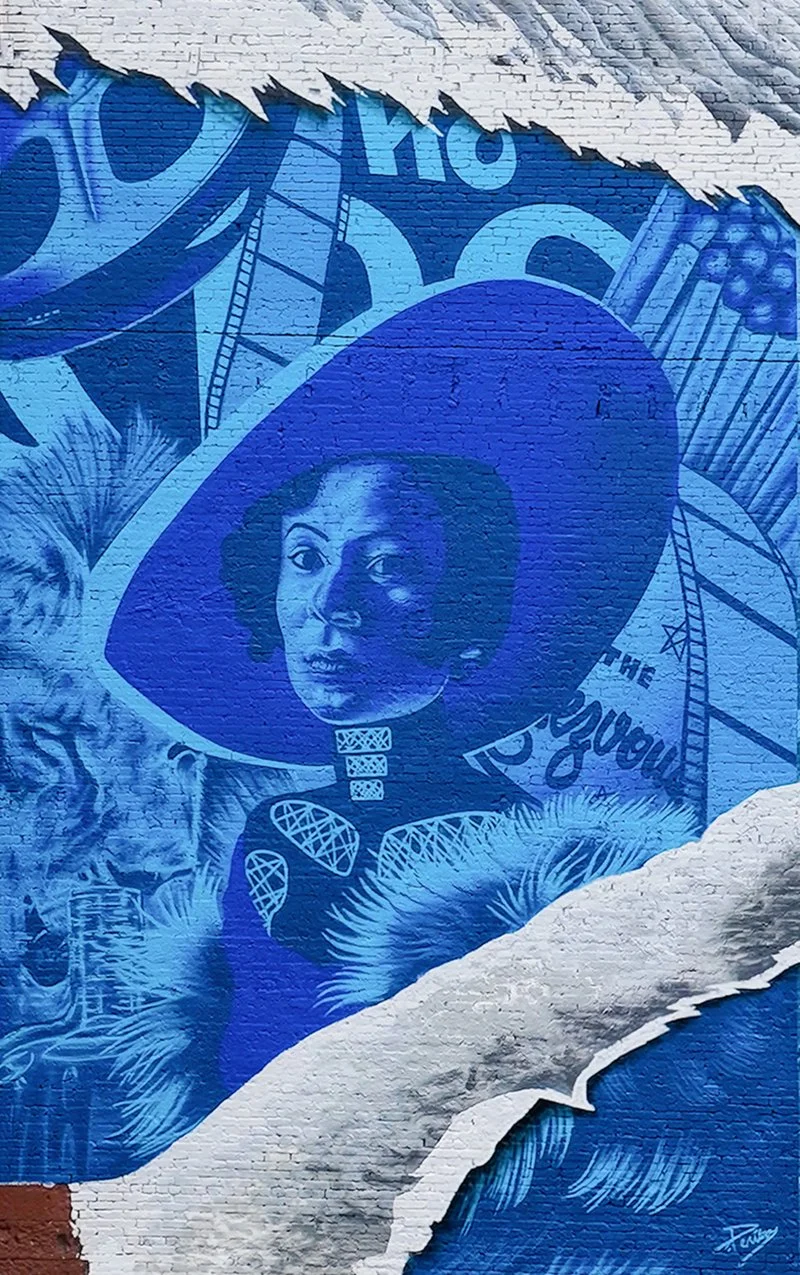
film Row
From the 1910s through the 1960s, Belltown was home to the region's film exchanges, which managed the rental, inspection, and shipping of commercial motion picture films to theaters across Washington, Oregon, Idaho, Montana, and Alaska. Seattle’s adoption of new land-use zoning in 1923 was the catalyst. Because the nitrocellulose film stock then in use was extremely flammable, city fire safety laws restricted its storage to the Belltown area—at the time, a gritty neighborhood still recovering from the massive earth-moving projects of the Denny Regrade. The concentration of these businesses became known as "Film Row."
The district initially developed further south around Third Avenue and Lenora Street—anchored by early silent-film entities like the French firm Pathé and the Mutual Exchange—but during the 1920s, operations migrated further north to the area around First and Second Avenues and Battery Street. Building codes mandated reinforced concrete construction and heavy, built-in storage vaults. By the 1930s, a network of seventeen exchanges operated in the area, along with numerous other film-related businesses.
Film exchanges allowed theater owners to preview new Hollywood releases in private screening rooms before selecting the movies they wanted to book for their hometown theaters. With the public's seemingly insatiable appetite for movies, theaters changed their programs frequently to keep audiences coming back. Renting films rather than purchasing them made this possible.
The concentration of competing film distributors and theater-supply vendors allowed theater managers to conduct all their business in one central location. By 1952, the annual payroll on Film Row alone exceeded $1,000,000 (more than $12.5 million in 2026 dollars). Advances in film technology and changes in transportation and distribution practices rendered Film Row's specialized facilities increasingly obsolete by the 1960s. Nevertheless, a handful of buildings from this remarkable chapter in Belltown's history survive today.
1910s – 1960s
Surviving Landmarks of Film Row
Built as the regional distribution headquarters for RKO Distributing Company; today it houses Rocco’s Specialty Bar and Pizzeria.
2316 Second Ave
The B.F. Shearer Building, which houses The Rendezvous and its intact 1932 private industry screening room, the Jewel Box Theater.
2318-2322 Second Ave
Built in 1925 as the Hotel Lorraine, which provided lodging for visiting theater managers, studio representatives, and movie stars; today it operates as Hostel Fish.
2327 Second Ave
Purpose-built for Metro-Goldwyn-Mayer (MGM) in 1936, featuring seven reinforced concrete film vaults; today it houses Buckley’s in Belltown.
2331 SeconD Ave
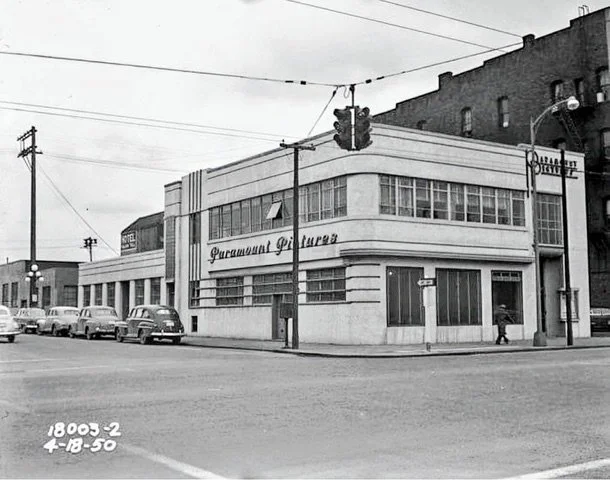
Custom-designed as a secure distribution office and vault facility for Paramount Pictures in 1937; today it houses Ora Nightclub.
2330 FIRST Ave
The artist
The Film Row portion of the Barnes Mural was painted by Gerardo Peña.